
Expert Knowledge
Update new regulations on tax policy, corporate law, and auditing standards, along with in-depth analysis from the Tavitax expert team.
 Nổi bật
Bộ 30 câu hỏi lĩnh vực Thương mại điện tử
Tổng hợp giải đáp các vướng mắc về thuế trong lĩnh vực Thương mại điện tử, bao gồm nghĩa vụ nộp thuế khi kinh doanh online, bán hàng qua MXH, và các quy định cho Hộ kinh doanh.
Đọc bài viết Tin tức
Bộ 30 câu hỏi liên quan đến lĩnh vực Bất Động Sản
Tổng hợp giải đáp các vướng mắc về thuế trong lĩnh vực Bất động sản, bao gồm Thuế TNCN khi chuyển nhượng, Thuế TNDN cho doanh nghiệp BĐS, và các quy định pháp lý mới nhất.
 Thuế
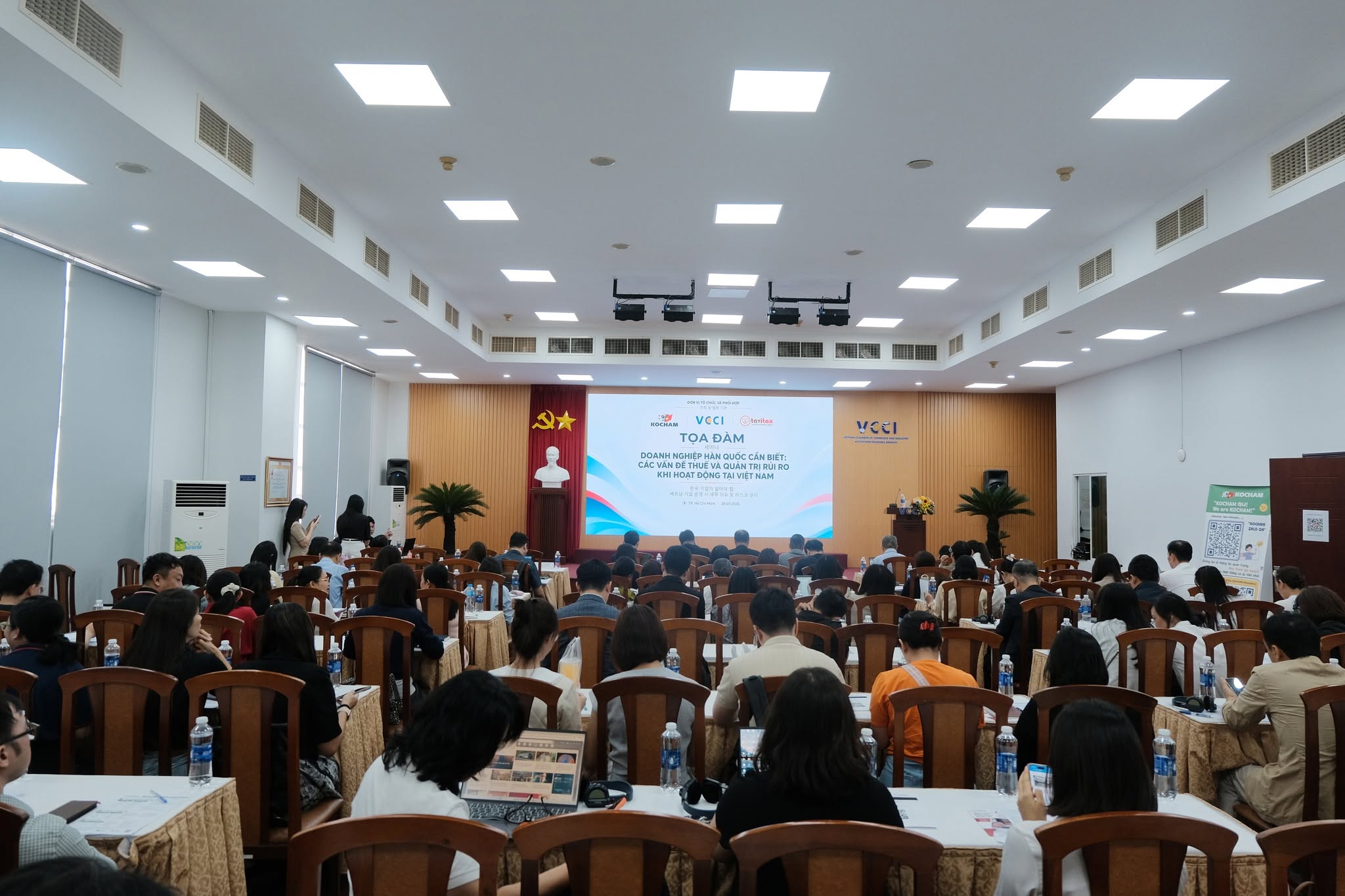
ThuếDoanh nghiệp Hàn Quốc cập nhật quy định thuế và quản trị rủi ro | TAVITAX
VCCI-HCM, KOCHAM và TAVITAX phối hợp tổ chức tọa đàm, cập nhật chính sách thuế, quản trị rủi ro và giải pháp tuân thủ dành cho doanh nghiệp Hàn Quốc tại Việt Nam.
 Thuế
ThuếTổng hợp Giải đáp vướng mắc Thuế - Hội thảo Hàn Quốc (24/07)
Cơ quan Thuế giải đáp chi tiết các vướng mắc của doanh nghiệp Hàn Quốc về rủi ro thanh tra thuế, giao dịch liên kết, thuế TNCN chuyên gia và hoàn thuế GTGT.
 Thuế
ThuếTAVITAX Tham Dự Lễ Ra Mắt Hội Doanh Nghiệp Phường Xuân Hòa Nhiệm Kỳ 2026–2031
TAVITAX vinh dự tham dự Lễ ra mắt Hội Doanh nghiệp Phường Xuân Hòa nhiệm kỳ I (2026–2031), đồng thời có đại diện tham gia Ban Chấp hành với vai trò Ủy viên Ban Thường vụ, góp phần thúc đẩy kết nối và phát triển cộng đồng doanh nghiệp.
 Thuế
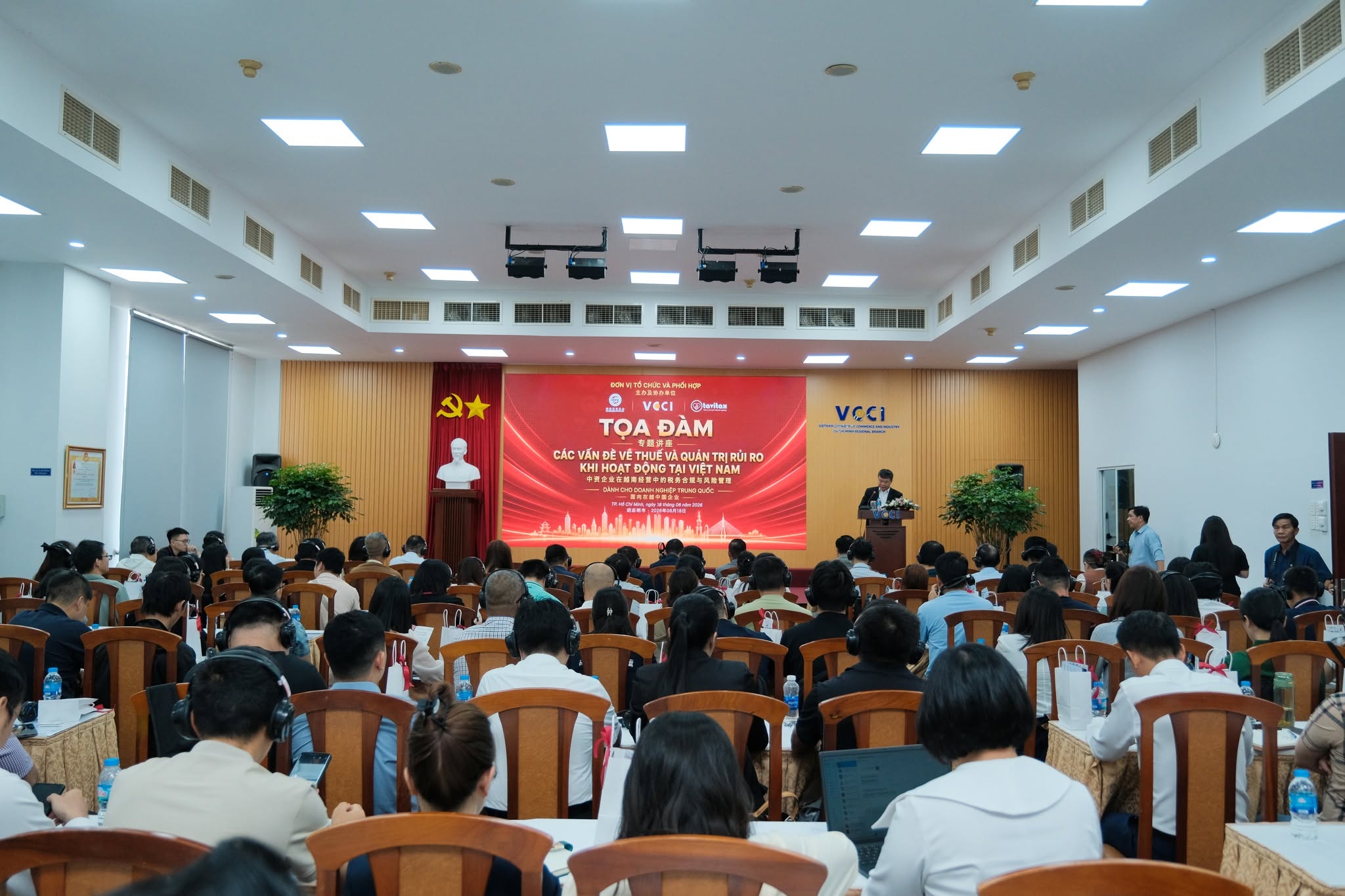
ThuếTAVITAX Phối Hợp VCCI Tổ Chức Tọa Đàm Thuế Và Quản Trị Rủi Ro Tại Việt Nam
Ngày 16/07/2026, TAVITAX vinh dự tham dự Lễ ra mắt Hội Doanh nghiệp Phường Xuân Hòa nhiệm kỳ I (2026 – 2031) được tổ chức tại Trung tâm Hội nghị 272, TP.HCM.
 Thuế
ThuếTavitax Tuyển Dụng: Kế Toán Tổng Hợp (Biết Tiếng Trung)
Tham gia đội ngũ Tavitax để cùng xây dựng giải pháp kế toán, thuế chuyên nghiệp cho doanh nghiệp trong nước và quốc tế. Mức lương hấp dẫn, môi trường chuyên nghiệp.
 Thuế
ThuếSai Sót Vô Ý Và Trốn Thuế Khác Nhau Như Thế Nào?
Phân tích sự khác biệt giữa sai sót vô ý và hành vi trốn thuế, cách cơ quan thuế đánh giá doanh nghiệp khi thanh tra và giải pháp hạn chế rủi ro thuế hiệu quả.
 Thuế
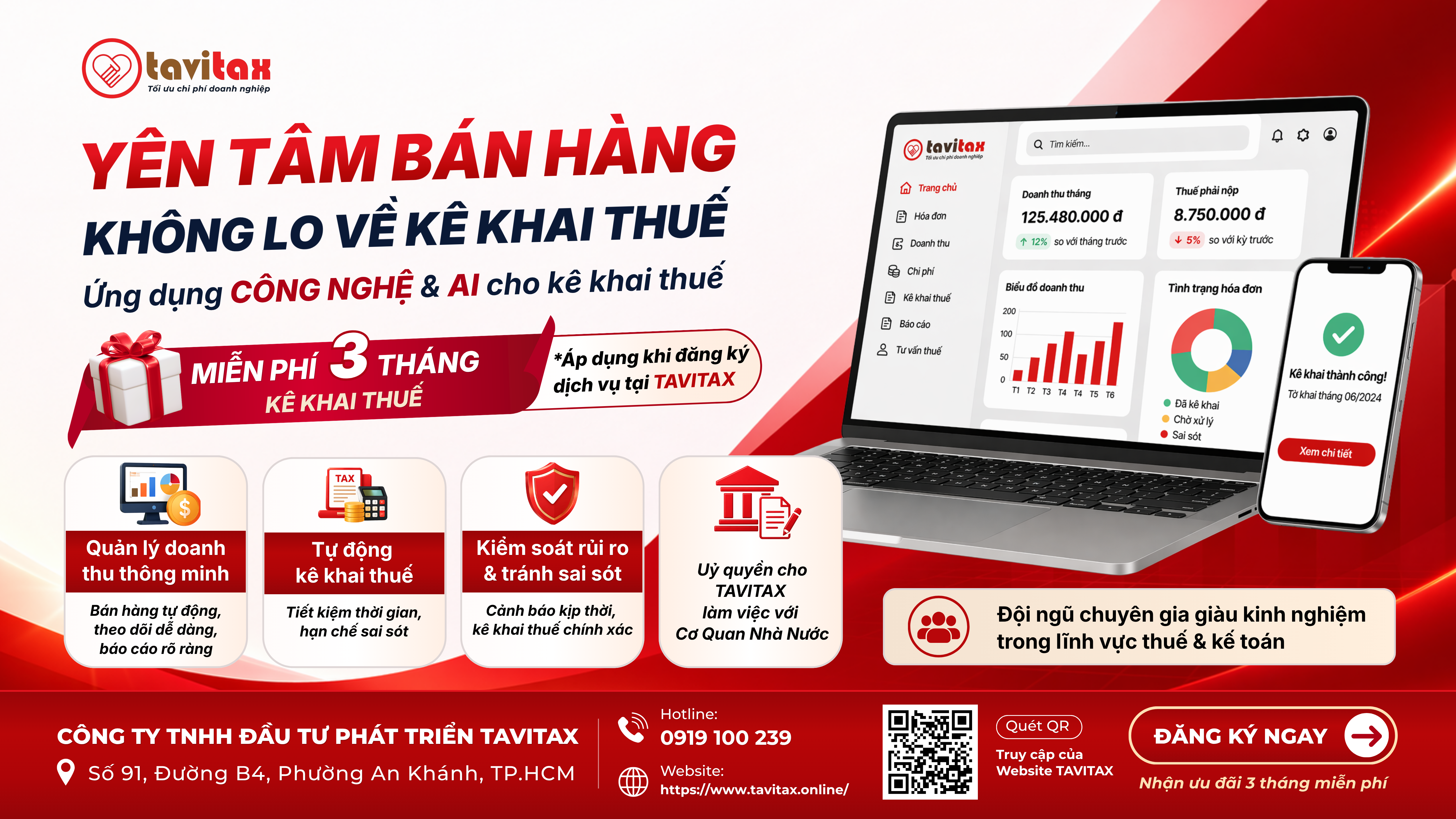
ThuếYên Tâm Bán Hàng – Không Lo Kê Khai Thuế Cùng TAVITAX
Trong thời đại kinh doanh số, việc bán được hàng chỉ mới là một phần của bài toán vận hành. Phần còn lại nằm ở việc quản lý tài chính và kê khai thuế sao cho chính xác
 AI
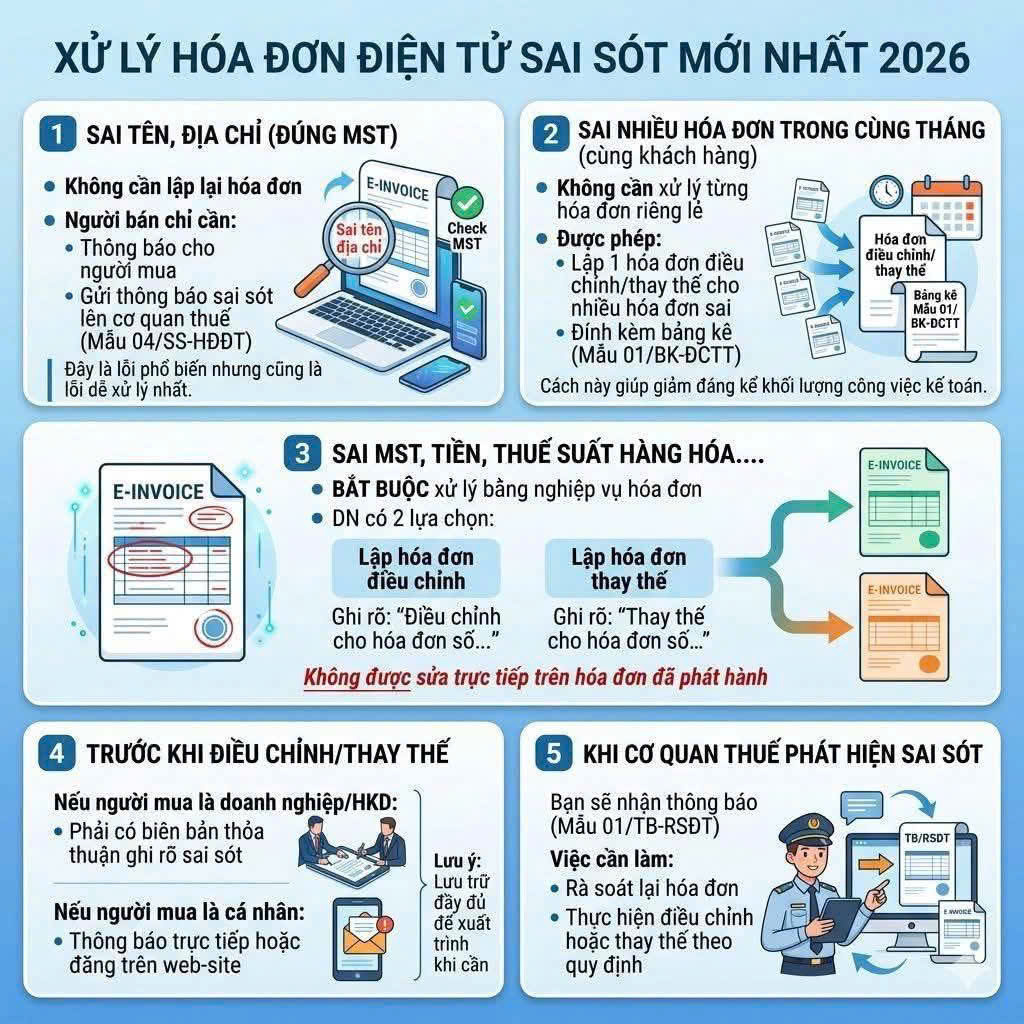
AIXử Lý Hóa Đơn Điện Tử Sai Sót Mới Nhất 2026: Hướng Dẫn Chi Tiết Cho Doanh Nghiệp
Trong bối cảnh cơ quan thuế ngày càng siết chặt quản lý bằng dữ liệu số, việc lập và xử lý hóa đơn điện tử đòi hỏi doanh nghiệp phải chính xác ngay từ đầu
OPEN LETTER: Proactively review tax codes - Protect rights, resolve business obstacles
This is an open letter from the Tax Department urging business owners and individuals to proactively review their tax codes, complete necessary procedures for business suspension or dissolution, and avoid illegal use of personal information for establishing businesses.
New points of Circular 90/2026/TT-BTC on tax registration
Circular No. 90/2026/TT-BTC on tax registration, effective from July 1, 2026. Clarifies and supplements subjects such as foreign organizations with e-commerce revenue, non-resident individuals operating on e-commerce platforms, petroleum project operating offices, and taxpayers subject to the global minimum tax.
New points of Circular 95/2026/TT-BTC
Circular No. 95/2026/TT-BTC, effective from July 1, 2026. Provides guidelines on the implementation of Double Taxation Avoidance Agreements, Mutual Agreement Procedures (MAP), and Advance Pricing Agreements (APA).
New points of Circular 94/2026/TT-BTC on risk management
Circular No. 94/2026/TT-BTC on compliance management and risk management in tax administration, effective from July 1, 2026:
- Change in approach: Shift focus to a unified model of 'compliance and risk management'.
- Modernization: Add new concepts, establish a digital management architecture (Big Data, Machine Learning, AI).
- Compliance classification: Maintain 4 compliance levels, focusing on supporting taxpayers.
- Risk management: Unify risk classification into 3 levels.
New points of Decree 255/2026/ND-CP on associated transactions
Decree No. 255/2026/ND-CP on tax administration for associated transactions, effective from July 1, 2026. Objective: Simplify administrative procedures, ensure consistency with the Law on Tax Administration No. 108/2025/QH15 and international OECD standards.
New points of Decree 254/2026/ND-CP and Circular 91 on invoices
Decree No. 254/2026/ND-CP and Circular No. 91/2026/TT-BTC on electronic invoices and documents (effective from July 1, 2026). Removes subjects related to self-printed invoices and documents.
Stipulating a number of articles of the Law on Tax Administration and Decree No. 254/2026/ND-CP of the Government detailing a number of articles and measures to organize and guide the implementation of Law on Tax Administration No. 108/2025/QH15 on e-invoices and e-vouchers
This Circular details a number of articles of the Law on Tax Administration and Decree No. 254/2026/ND-CP regarding e-invoices and e-vouchers. Specifically, it clarifies the registration process, standard formats, authorization for issuing invoices, and handling errors for issued e-invoices. Furthermore, the Circular provides detailed guidance on symbols and templates for e-invoices and e-vouchers applied to different groups. For e-invoice service providers, strict technical standards for security and storage are established. Notably, it supplements regulations on the content of VAT e-invoices cum tax refund declarations, and mandatory cases for transferring e-invoice/e-voucher data directly to tax authorities. In addition, the Circular mentions measures to encourage consumers to request invoices and a reward mechanism for whistleblowing against fraud and violations in the e-invoice sector, while also stipulating procedures for destroying backlogged paper invoices.
Circular stipulating the management of compliance and risk in tax administration
Circular No. 94/2026/TT-BTC comprehensively regulates the collection, processing, management, and use of taxpayer-related information to serve compliance and risk management in taxation. The document introduces a detailed set of assessment criteria to classify the risk levels of individual and corporate taxpayers, thereby serving as a basis for applying appropriate tax management measures (such as inspections, audits, or expedited procedures). Concurrently, the circular clearly defines criteria for evaluating taxpayers' legal compliance, establishing a clear reward and penalty mechanism to encourage transparency. The subjects of application are not limited to taxpayers but also encompass tax authorities, tax officials, and organizations and individuals involved in sharing and cross-checking tax data.
Decree 252/2026/ND-CP
Decree 252/2026/ND-CP is a document detailing and guiding the implementation of several articles of the Enterprise Law 2025. The decree focuses on clarifying regulations regarding dossiers, sequences, and procedures for online enterprise registration on the National Portal, helping to shorten time and optimize costs for startups. Additionally, the decree delves into the management organization, decentralization, and executive operations of business types such as limited liability companies, joint-stock companies, and private enterprises. Notably, it supplements stricter regulations on protecting minority shareholders, preventing conflicts of interest between managers and the enterprise, and provides detailed guidance on cases of corporate reorganization, dissolution, or bankruptcy to ensure a safe business environment.
Decree 253/2026/ND-CP
Decree 253/2026/ND-CP was promulgated to establish a solid legal framework for tax administration regarding enterprises with associated transactions, particularly multinational corporations and companies with complex ownership structures. The decree updates and internalizes the latest international standards on Base Erosion and Profit Shifting (BEPS). The document specifies methods for determining associated transaction prices, mandatory requirements for preparing national files, global files, and country-by-country reports. Concurrently, the decree sets limits on deductible interest expenses when calculating CIT, outlines cases exempt from preparing associated transaction dossiers, and details the responsibilities of tax authorities in inspecting, auditing, and filtering transfer pricing risks.
Decree 254/2026/ND-CP on e-invoices and e-vouchers
Decree 254/2026/ND-CP plays a pivotal role in detailing the articles and organizational measures to guide the implementation of the Law on Tax Administration No. 108/2025/QH15, with a particular focus on the management of e-invoices and e-vouchers. The decree outlines a mandatory roadmap for applying electronic PIT withholding documents and electronic receipts for all agencies, organizations, and individuals. It clarifies concepts regarding e-invoices generated from cash registers connected for electronic data transfer with tax authorities, thereby effectively preventing tax revenue loss in the retail and F&B sectors. The decree also establishes regulations on the issuance of tax authority codes, addresses systemic risks, and defines the responsibilities of providers of e-invoice data transmission and reception solutions.
Decree 255/2026/ND-CP
Decree 255/2026/ND-CP is a specialized document stipulating administrative penalties in the fields of taxation and invoicing. A highlight of this decree is the significant increase in monetary fines for buying, selling, or using illegal invoices, using fake invoices for tax evasion, or issuing invoices at the wrong time. The penalty framework is designed to increase proportionally based on the severity and value of the violating cash flow. In addition to monetary fines, the decree supplements strict remedial measures such as forcing the cancellation of invoices, mandating the return of illegal profits, and suspending the right to use e-invoices for businesses that intentionally violate regulations repeatedly. The decree also clearly defines the sanctioning authority of various tax management levels and relevant enforcement forces.